

BY GODWIN OBI
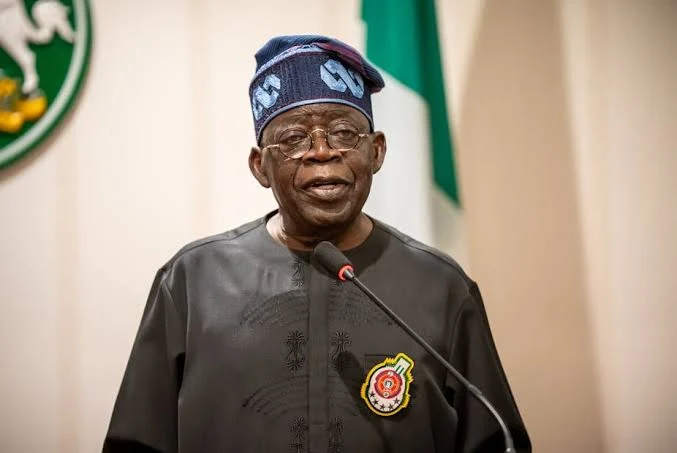
Uncertainty has gripped key institutions in Nigeria’s oil and gas sector following a new executive order by President Bola Tinubu, directing the immediate reallocation of oil and gas revenues to the Federation Account for distribution among the three tiers of government.
Investigations by Frontline Reporters indicate that the directive — which effectively halts the retention of certain internally generated revenues — has triggered concern within the Nigerian Upstream Petroleum Regulatory Commission (NUPRC), the Nigerian National Petroleum Company Limited (NNPC), and the Midstream and Downstream Gas Infrastructure Fund (MDGIF).
Funding Model Under Scrutiny
Industry operators and regulatory sources say the anxiety stems from the absence of a clearly defined alternative funding framework, particularly for the NUPRC, whose statutory obligations are partly financed through the four per cent cost-of-collection mechanism provided under the Petroleum Industry Act (PIA).
Senior NUPRC officials, who spoke on condition of anonymity, warned that moving the commission to conventional budgetary allocations could undermine its operational independence.
“The PIA deliberately insulated the regulator from bureaucratic funding delays,” one official said. “Can an executive order override an Act of the National Assembly?”
The officials noted that the commission’s remuneration structure was designed to remain competitive with international oil companies. They expressed fears that funding uncertainty could impair staff retention, field inspections, monitoring, and enforcement activities.
According to internal figures cited by sources, the commission spent about ₦88bn on salaries and allowances in 2024, while generating roughly ₦322.8bn in 2025 from the cost-of-collection framework.
Another official cautioned that instability in regulatory funding could carry wider implications: “When salaries or welfare are threatened, you risk weakening oversight in a sector already battling oil theft and vandalism.”
Concerns at NNPC
At the NNPC, officials expressed mixed reactions. Some warned that the directive could disrupt production sharing contract (PSC) operations and complicate existing commercial arrangements.
“Royalties and taxes under PSCs are settled in barrels, not cash,” an official explained. “Any misunderstanding of that process could create operational gaps.”
The source added that portions of production are already tied to crude-backed loan repayments, raising questions about how obligations to lenders would be managed under the revised remittance structure.
He argued that abrupt policy shifts could unsettle investors, particularly in the deepwater segment. “The PIA was meant to assure fiscal stability. Investors are sensitive to signals suggesting otherwise.”
However, another senior NNPC official struck a calmer tone, insisting that the company remained financially stable.
“Operations across the value chain continue uninterrupted,” the official said. “Capital allocation and investment priorities are being reviewed in line with the evolving fiscal landscape.”
MDGIF Yet to Speak
Sources familiar with developments at the MDGIF said the fund is reviewing the implications of the order on its revenue collection and remittance processes but has yet to issue an official statement.
Marketers Applaud Directive
In contrast, the Petroleum Products Retail Outlets Owners Association of Nigeria (PETROAN) commended the President’s action, describing it as a bold step toward fiscal discipline and transparency.
PETROAN President Billy Gillis-Harry said centralised remittance would enhance accountability and improve fiscal stability. He added that the directive could further reposition the NNPC as a commercially disciplined entity.
Labour Unions Demand Clarity
The Nigeria Union of Petroleum and Natural Gas Workers (NUPENG) called for an urgent stakeholders’ meeting to clarify the order’s implications for jobs and labour agreements.
Similarly, the Petroleum and Natural Gas Senior Staff Association of Nigeria (PENGASSAN) rejected the directive, warning that it could threaten staff welfare and institutional stability. The union said it would convene an emergency National Executive Council meeting.
Government Insists on Compliance
The Federal Government has directed immediate compliance. In a letter titled “Implementation of Presidential Executive Order on Safeguarding Federation Oil and Gas Revenues,” the Minister of State for Finance, Doris Uzoka-Anite, instructed affected agencies to cease deductions and off-budget revenue retentions.
The directive, the government said, reinforces Section 162 of the Constitution, which mandates that all federation revenues be paid into the Federation Account.
Experts Urge Caution
Chief Executive Officer of the Centre for the Promotion of Private Enterprise (CPPE), Muda Yusuf, warned that abrupt changes to revenue flows could strain institutional cash flow if not carefully managed.
“These institutions are not designed for rigid envelope budgeting,” he said. “The transition must be seamless to avoid paralysing operations.”
Energy law expert Ayo Ayoade argued that executive orders should not conflict with statutory provisions of the PIA.
“An Act of the National Assembly is superior,” he said, while acknowledging that direct remittance mechanisms are administratively complex because oil revenues are often received in kind.
Revenue Service Defends Reform
Executive Chairman of the Nigeria Revenue Service (NRS), Zacch Adedeji, defended the reforms, saying they were designed to eliminate cost-of-collection practices and enhance transparency.
“It is the duty of government to fund its agencies,” he stated. “Regulators should focus on oversight, not revenue retention.”
As implementation begins, attention is shifting to the National Assembly, where debates may test the balance between executive authority and statutory independence in Nigeria’s petroleum governance framework.
ADVERTISEMENTS












2026-02-20