


BY FRONTLINE REPORTERS
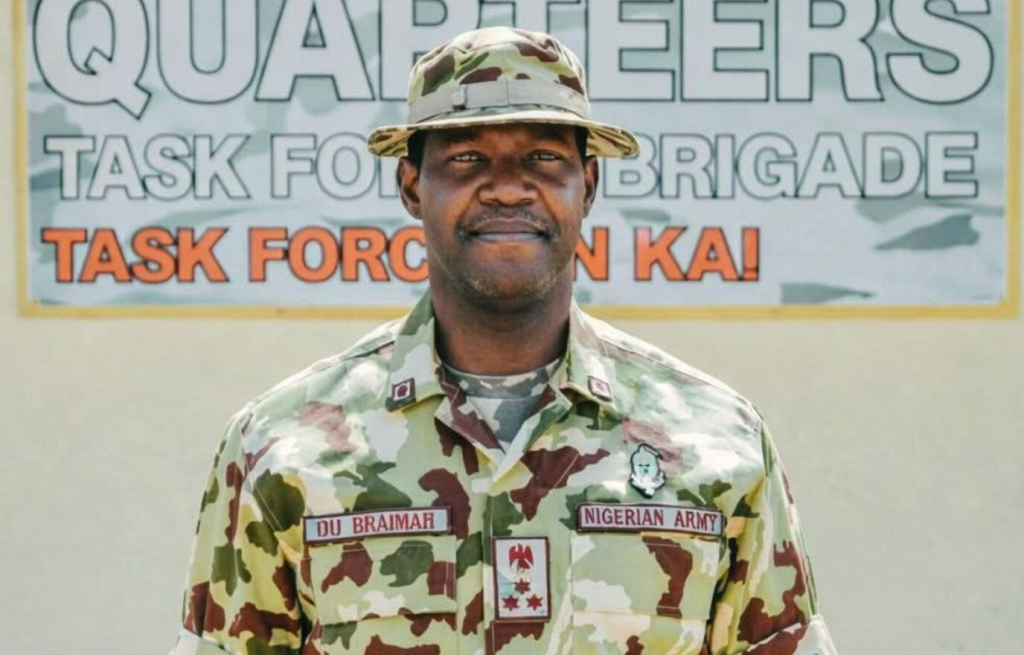
Fresh details have emerged on the circumstances surrounding the killing of Brigadier General Oseni Braimah, Commander of the 29 Task Force Brigade, following a midnight attack on a military base in Benisheikh.
Surviving soldiers described the assault as one of the fiercest in recent months, as insurgents suspected to be members of Boko Haram and Islamic State West Africa Province launched a coordinated offensive on multiple military positions.
The attack, which occurred around 12:30 a.m. on Thursday, targeted at least three formations in the strategic town along the Maiduguri–Damaturu highway. Eyewitnesses said the insurgents advanced in large numbers, attacking simultaneously from different directions before pushing into civilian areas.
A soldier who survived the attack said the scale and coordination were unprecedented. He noted that while troops initially resisted, the attackers’ numerical superiority and multi-pronged approach made it difficult to sustain a coordinated defence.
Another survivor said morale among troops began to decline as reports filtered in that other positions had been overrun. The situation worsened when rumours spread that the brigade commander had been killed, triggering panic and confusion.
Sources said the psychological impact of the assault contributed to a breakdown in coordination, forcing some soldiers to retreat into the town. The gun battle reportedly lasted over one hour, with explosions and gunfire sending both residents and military personnel fleeing for safety.
Controversy over Braimah’s death
In the aftermath, claims surfaced that the late general died due to a malfunctioning Mine-Resistant Ambush Protected (MRAP) vehicle. However, military sources disputed the account, insisting the vehicle was disabled after being set ablaze during the intense fighting.
A senior source within the brigade described the malfunction claim as misleading, noting that the situation was far more complex, with insurgents closing in from multiple directions.
Another insider said only those present at the scene could give a definitive account, as many of them also lost their lives in the encounter. The source added that while the insurgents eventually scattered under pressure, their large numbers gave them a temporary advantage.
A former driver to the late general also defended his record, describing him as meticulous about equipment maintenance and responsive to the welfare of personnel.
However, another source suggested there may have been broader systemic lapses, pointing to previous concerns about maintenance of operational vehicles within the formation.
Civilian losses, destruction
Residents of Benisheikh recounted scenes of panic as explosions and sustained gunfire rocked the town. Many fled their homes in the middle of the night, while some soldiers reportedly moved into civilian areas for cover.
Witnesses said the temporary withdrawal of troops created a security gap, allowing insurgents to loot military facilities and set fire to nearby structures. Shops, vehicles and other civilian property were destroyed, while travellers stranded due to road closures abandoned their vehicles and fled.
Army dismisses casualty claims
Reacting to the reports, the Nigerian Army, under Operation Hadin Kai, dismissed claims that 17 soldiers were killed in the attack.
The Media Information Officer, Lt.-Col. Sani Uba, said the official casualty figure stood at two officers and two soldiers, describing contrary reports as false and misleading.
He also refuted claims of equipment failure, stating that the brigade commander’s MRAP vehicle was only temporarily immobilised in the heat of battle as he coordinated operations.
According to the Army, troops eventually repelled the attack, retained control of their positions and forced the insurgents into a disorganised retreat.
A troubling pattern
The death of Brigadier General Braimah adds to a growing list of senior officers lost in Nigeria’s North-East insurgency, raising fresh concerns about operational strategy, intelligence and force protection.
Tinubu reacts
Meanwhile, President Bola Tinubu expressed condolences over the incident, praising the bravery of the troops and urging continued resolve in the fight against insurgency.
He described the attack as a sign of desperation by insurgents and assured that the Federal Government remains committed to restoring peace and honouring fallen soldiers.
ADVERTISEMENTS













2026-04-10
Previous Post: Customs Bust Wildlife Trafficking Ring, Rescue Live Pangolins in Major Crackdown