

BY FRONTLINE REPORTERS
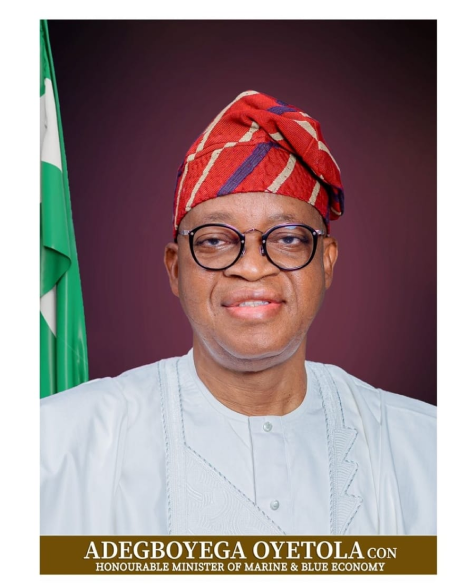
Nigeria’s maritime industry may soon witness a major shake-up as the Federal Ministry of Marine and Blue Economy prepares to approve a groundbreaking digital pricing and standardisation framework for freight forwarding services.
The proposed system, which covers haulage, customs clearance, and other logistics charges, is expected to bring long-awaited transparency, predictability, and fairness to a sector often criticised for hidden costs, arbitrary charges, and pricing confusion.
This was revealed in Lagos by the Registrar of the Council for the Regulation of Freight Forwarding in Nigeria (CRFFN), Mr. Kingsley Igwe, during a town hall meeting organised by JournalNG.
End of Lump-Sum Charges?
For years, importers and exporters have struggled with unclear freight forwarding bills, where multiple charges are bundled into vague lump-sum payments, leaving clients unsure of what they are paying for.
According to Igwe, the new framework is designed to end that era.
“Today, when you want to clear a consignment, you often don’t know the actual service charge of the agent because everything is lumped together,” he said.
He explained that CRFFN conducted extensive studies and benchmarked Nigeria’s pricing models against global standards, especially in haulage services where costs are calculated per kilometre and reflect operational realities such as fuel, wear and tear, insurance, risk exposure, and truck value.
Proposal Already Before Ministry
Igwe disclosed that the proposal has already been submitted to the Ministry and is currently under review.
“Once approval is secured, we will commence intensive stakeholder engagement to determine the implementation process,” he stated.
WTO Model Inspires New Pricing Structure
The CRFFN Registrar said the reform draws inspiration from the World Trade Organization (WTO) framework for reducing uncertainty in global logistics costs.
He noted that advanced economies already rely on standard operating procedures and transparent pricing systems covering ports, customs, haulage, and freight forwarding operations.
“That is what Nigeria is trying to institutionalise,” he said.
Freight Agents “Dying Inside Slowly”
In an emotional moment, Igwe pushed back against the widespread belief that freight forwarders make excessive profits.
Instead, he painted a picture of struggling agents trapped in a broken system.
“Most people think agents go home with huge money after clearing cargo. It’s not true. Many end up broke.”
He explained that due to inaccurate cost estimates and surprise charges such as Customs debit notes, many agents are forced to borrow money to complete transactions after clients refuse to provide additional funds.
“Some are owing people everywhere. They are dying inside slowly,” he lamented.
Digital System to Protect Both Shippers and Agents
Igwe said the new digital mechanism will calculate all potential risks and hidden variables upfront, allowing freight forwarders to maintain a fixed service charge while assigning responsibility for extra risks where necessary.
He also accused some shippers of submitting misleading cargo documents, leaving agents to bear the consequences.
New Era for Nigeria’s Logistics Industry
If approved and successfully implemented, the framework could transform Nigeria’s freight forwarding industry by eliminating guesswork, improving accountability, and ensuring operators remain profitable while customers enjoy fair and transparent pricing.
For many in the maritime sector, the proposed reform may mark the beginning of a more modern and globally competitive logistics ecosystem.
ADVERTISEMENTS












2026-04-25
2026-04-27
Previous Post: Kidnap Terror Deepens: 30 Kwara Kings Flee as Communities Fall Silent