

BY FRONTLINE REPORTERS
The Federal Government has directed the Nigerian Midstream and Downstream Petroleum Regulatory Authority (NMDPRA) to ensure petroleum marketers do not exploit Nigerians through excessive fuel pricing under the country’s deregulated downstream petroleum sector.
The directive was issued by the Minister of State for Petroleum Resources (Oil), Senator Heineken Lokpobiri, during the opening of the NMDPRA General Counsel and Legal Advisers Forum in Abuja.
The two-day forum, themed “Beyond Compliance: Driving Regulatory Certainty and Investment Confidence in Nigeria’s Petroleum Sector,” focused on strengthening regulation and attracting investment into the oil and gas industry.
Lokpobiri said that while the downstream sector had been fully deregulated, the regulator must ensure that deregulation does not become a platform for profiteering at the expense of consumers.
He noted that following the easing of geopolitical tensions in the Middle East and the sharp decline in international crude oil prices, Nigerians expected a corresponding reduction in the pump price of Premium Motor Spirit (PMS), popularly known as petrol.
According to him, despite crude oil prices falling from about $120 per barrel to nearly $72 per barrel, petrol prices have remained largely unchanged.
“Following the de-escalation of tensions in the Middle East, we expected to see a commensurate reduction in the prices of PMS and other petroleum products. While we believe market forces will eventually restore equilibrium, the regulator has a statutory responsibility to ensure deregulation does not become an avenue for profiteering,” the minister said.
Lokpobiri also directed the NMDPRA to intensify monitoring of filling stations to ensure consumers receive the correct quantity of fuel paid for.
“When a consumer pays for 10 litres of petrol, the person should receive exactly 10 litres—not less,” he said.
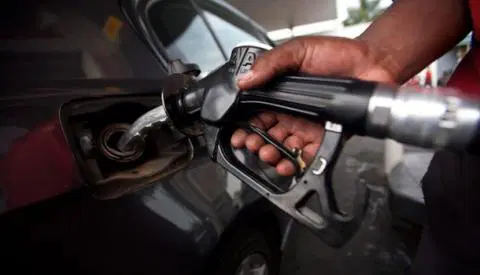
The minister attributed Nigeria’s uninterrupted fuel supply during the recent Middle East tensions to the deregulation of the downstream sector and the increased contribution of domestic refineries.
He described the Petroleum Industry Act (PIA) as the foundation for transforming Nigeria’s petroleum industry but stressed that sustained investor confidence would depend on consistent, transparent and predictable regulation.
“We will not be judged by the number of regulations we produce but by the investments we attract, the businesses we enable, the jobs we create and the value we leave behind,” he added.
Earlier, the Chief Executive of the NMDPRA, Mallam Rabiu Umar, said the industry had reached a stage where regulatory certainty, transparency and investor confidence were as important as compliance.
He said the implementation of the PIA had shifted attention from what the law provides to how effectively it is being implemented.
Also speaking, the agency’s Secretary and Legal Adviser, Dr Joseph Tolorunse, said regulatory certainty promotes stable fiscal policies, discourages policy reversals and enhances Nigeria’s competitiveness in attracting investment.
Depot Prices Show Slight Decline
Meanwhile, petroleum depot prices recorded marginal reductions across several locations, including Lagos, Port Harcourt, Calabar and Warri, reflecting gradual adjustments in the downstream market.
Most Premium Motor Spirit (PMS) prices declined by between N1 and N6 per litre, while diesel prices recorded mixed movements, with some depots raising prices and others implementing reductions.
Industry analysts attributed the moderation in depot prices to increased domestic refining capacity and heightened competition among suppliers.
Dangote Refinery Influencing Market Prices
Managing Director of 11 Plc, Osagie Ogedegbe, said the Dangote Refinery currently plays a dominant role in determining petrol prices in Nigeria because it remains the country’s principal supplier.
According to him, most marketers purchase products from the refinery and retail them based on its pricing.
He expressed optimism that pump prices could begin to decline in the coming days if the naira remains stable and international crude oil prices continue their downward trend.
Energy consultant Atiemoria Ebhodaghe explained that retail fuel prices have remained high largely because marketers are still selling products purchased at higher costs.
He said marketers typically increase prices immediately when costs rise but delay reductions until existing inventories acquired at higher prices are exhausted.
Although Dangote Refinery purchases crude oil in naira, he noted that the crude is still valued using international dollar-based benchmarks, making production costs sensitive to exchange rate movements.
He, however, said falling global crude prices and recent reductions in wholesale depot prices indicate that consumers could soon begin to enjoy lower pump prices.
A senior official of the Major Energies Marketers Association of Nigeria (MEMAN), who requested anonymity, also said marketers were reducing prices gradually to recover losses incurred over the past 18 months.
According to the official, such gradual adjustments are common in commodity trading, as businesses seek to minimise inventory losses whenever market prices fall.
Consumers Yet to Benefit
Market intelligence platform Petroleumprice.ng observed that despite lower crude oil and depot prices, consumers are yet to experience significant reductions at filling stations.
Its Managing Director, Olufemi Jeremiah, said the industry was still waiting for downstream operators to reflect current market realities in retail prices.
Similarly, the National President of the Oil and Gas Services Providers Association of Nigeria (OGSPAN), Mazi Colman Obasi, attributed the slow reduction in pump prices to the country’s still-evolving deregulated market.
He noted that fuel prices in Nigeria have historically risen faster than they decline.
NLC Blames Government
The Nigeria Labour Congress (NLC) accused the Federal Government of allowing monopolistic practices to flourish in the downstream petroleum sector, saying this was responsible for the continued high pump prices despite falling global crude oil prices.
An NLC official, who spoke anonymously, argued that the government had empowered a few dominant players to dictate market prices, contrary to the principles of genuine deregulation.
The labour union maintained that a truly deregulated market should be driven by healthy competition, transparency and effective regulatory oversight rather than the dominance of a few operators.
According to the Congress, Nigerians should already be benefiting from lower fuel prices given recent improvements in global market conditions.
The NLC urged the Federal Government to dismantle monopolistic practices, encourage greater competition among operators and strengthen regulatory oversight to ensure consumers benefit from favourable developments in the international oil market
ADVERTISEMENTS








2026-06-29