

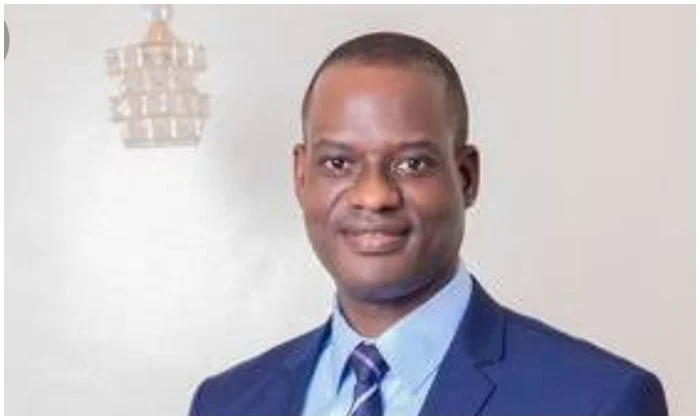
Chairman of the Presidential Tax Reforms Committee, Mr Taiwo Oyedele.
By Frontline Reporters
Chairman of the Presidential Fiscal Policy and Tax Reforms Committee, Mr Taiwo Oyedele, has said Lagos State has the capacity to generate as much as ₦1 trillion annually from property tax if the sector’s full potential is properly harnessed.
Oyedele made this assertion on Tuesday while delivering the keynote address at the Tax Reform Summit 2026, themed “From Reforms to Results: The Lagos Implementation Roadmap, Creating a Tax Environment that Works for All.” The summit was convened by the Office of the Special Adviser on Taxation and Revenue in collaboration with the Lagos State Treasury Office.
According to Oyedele, property taxation remains one of the most underutilised yet stable revenue sources available to states and local governments. He stressed that with effective enumeration, valuation and enforcement, property tax could serve as a sustainable revenue anchor for Lagos State.
“Property taxation is difficult to evade when done properly. It grows with urban development and aligns payment with visible public services,” he said. “As government invests in roads, water and other infrastructure, property values rise, living standards improve and, in turn, more revenue is generated to finance further development.”
He explained that if just two million properties in Lagos are taxable, with an average value of ₦100 million and taxed at a modest rate of 0.5 per cent, the state could realise ₦1 trillion annually for reinvestment into communities.
Oyedele emphasised that reliable data remains critical to achieving this goal. He noted that credible databases covering property registers, valuations and taxpayer information are essential for effective fiscal and economic planning.
“Data is not optional. You need a credible database of taxpayers, accurate valuation of properties and reliable information on income earners,” he said. “If Lagos gets this right, the revenue base will continue to expand.”
He challenged Lagos State to demonstrate leadership in data management and in enacting a strong legal framework for tax operations at the sub-national level. Oyedele disclosed that a model tax harmonisation law has already been drafted by the Presidential Fiscal Policy and Tax Reform Committee in collaboration with the Joint Revenue Board, urging Lagos to adopt it, following similar actions by states such as Ekiti, Zamfara, Anambra and Kano.
He also called for the harmonisation of revenue collection across agencies into the Lagos State Internal Revenue Service, warning that fragmented collection systems breed inefficiency and undermine reform outcomes.
“Tax reform is not an event; it is a process that requires courage, consistency and collaboration,” Oyedele said. “The future of Nigeria’s fiscal sustainability will be shaped not only in Abuja but also in states and local governments.”
In his opening remarks, Lagos State Governor, Mr Babajide Sanwo-Olu, reiterated that the success of Nigeria’s tax reform agenda depends largely on effective implementation at the state level. He said Lagos is positioning itself as a leading sub-national driver of the reforms.
“Our focus is not just compliance but effective execution that delivers real value to citizens and businesses,” the governor said, describing tax reform as a governance reform anchored on transparency, simplicity, digital efficiency and fairness.
Sanwo-Olu added that taxation is a social contract and that voluntary compliance improves when citizens trust that revenues are responsibly managed and reinvested into infrastructure, healthcare, education, security and social protection programmes.
Also speaking, the Special Adviser to the Governor on Taxation and Revenue, Mr Abdul-Kabir Ogungbo, said the summit aims to establish a standardised revenue portal across all local governments and LCDAs, integrated with state and national identification systems to enhance transparency and accountability.
Ogungbo noted that given Lagos State’s population size, economic activities and infrastructure demands, its annual revenue targets should be significantly higher. He argued that sustainable development would require Lagos to generate between ₦10 trillion and ₦15 trillion annually to meet the needs of its more than 30 million residents.
The summit, he said, underscores the urgency of reforming revenue mobilisation to match the scale and complexity of the Lagos economy.
ADVERTISEMENTS








2025-12-24