
BY GODWIN OBI
The League of Maritime Editors (LOME) has criticised the Lagos State Government for opposing the Nigerian Ports Authority’s renewed efforts to strengthen operations at the Warri Port Complex, describing Lagos’ position as narrow-minded and harmful to national economic balance.
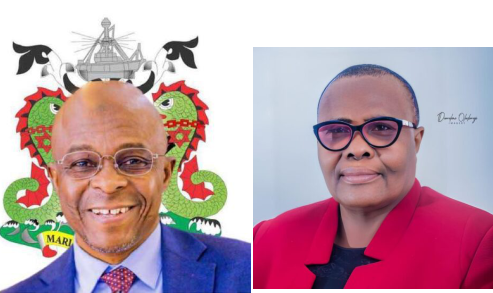
In a statement endorsed by President of the Association, Pastor Mrs. Remi Itie, LOME said the strong reaction from Governor Babajide Sanwo-Olu’s administration reflects a longstanding attitude that seeks to preserve Lagos’ dominance in maritime trade at the expense of other regions.
The group argued that Nigeria is a federation, not a territory where one state must dictate economic direction or monopolise major national assets.
The editors noted that Lagos has long struggled with congestion, corruption, and operational inefficiencies around the Apapa and Tin Can ports—problems they say stem from Lagos’ failure to manage its own traffic systems, infrastructure, and regulatory environment.
According to the group, it is therefore unreasonable for Lagos to oppose the decentralisation of port operations to Warri, Onne, or Calabar.
They stressed that strengthening the Warri Port Complex is not a temporary fix, but a long-overdue correction to decades of imbalance that have left the South-South and South-East regions marginalized in economic infrastructure distribution.
Allowing more ports outside Lagos to flourish, they added, will boost national cohesion and support traders who should not be compelled to move all cargo through Lagos.
LOME faulted Lagos’ claims of “unwavering commitment” and “heavy investments” in traffic management, noting that the persistent gridlock and corruption around Apapa contradict such assertions.
The group argued that resistance to Warri’s revival is driven not by concerns about efficiency but by entrenched interests benefiting from the status quo in Lagos.
Founded in 1998, the League of Maritime Editors said it remains committed to correcting misconceptions within the maritime sector and promoting policies that strengthen equitable national development. The group maintained that Nigeria’s economic future depends on balance, not domination by any single state.
ADVERTISEMENTS