
The Central Bank of Nigeria (CBN) says the ongoing bank recapitalisation exercise is progressing smoothly, with 16 banks already meeting the new capital thresholds ahead of the March 31, 2026 deadline. An additional 27 banks have also raised capital through mergers, acquisitions and fresh equity injections as the industry undergoes its largest transformation since the 2004 banking consolidation.
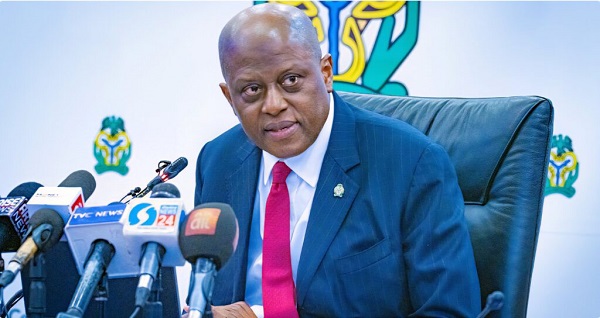
CBN Governor Olayemi Cardoso made the disclosure on Tuesday in Abuja while briefing journalists after the Monetary Policy Committee (MPC) meeting. He described the recapitalisation process as “orderly” and “fully aligned” with the regulator’s expectations.
“We are monitoring developments, and indications show the process is moving in the right direction,” Cardoso said.
New Capital Threshold
As of April 2025, Nigeria had 44 deposit-taking institutions, including:
- 7 commercial banks with international authorisation,
- 15 national commercial banks,
- 4 regional commercial banks,
- 4 non-interest banks,
- 6 merchant banks,
- 7 financial holding companies, and
- 1 representative office.
Under the recapitalisation framework, banks must raise their paid-in capital (excluding reserves and retained earnings) to match their licence categories:
- N500 billion – International commercial banks
- N200 billion – National commercial banks
- N50 billion – Regional commercial banks
- N20 billion – National non-interest banks
- N10 billion – Regional non-interest banks
- N50 billion – Merchant banks
The CBN has repeatedly stressed that only paid-up capital and share premium count toward the new thresholds.
Stronger Banks for a Stronger Economy
Cardoso said the reforms would deepen the resilience of Nigerian banks, many of which operate across multiple African markets.
“We are building a financial system that will be fit for purpose for the years ahead,” he said. “These new buffers will equip banks to manage risks in the multiple jurisdictions where they operate.”
He added that a stronger capital base would improve banks’ capacity to support households and businesses, drive credit growth, and reinforce confidence in Nigeria’s financial system.
Recapitalisation to Support $1 Trillion GDP Target
Cardoso recalled that the CBN Deputy Governor for Financial System Stability, Phillip Ikeazor, had earlier outlined the broader objectives of the recapitalisation during a stakeholder engagement hosted by the UK–Nigerian Chamber of Commerce.
Ikeazor said the programme is expected to:
- expand banks’ lending capacity,
- attract foreign direct investment,
- boost foreign exchange liquidity,
- contribute to GDP growth,
- strengthen credit ratings,
- broaden ownership structures,
- improve governance, and
- increase equity market activity.
“With the recapitalisation programme, our goal is to trigger the emergence of stronger, healthier and more resilient banks,” Ikeazor said.
Regulatory Oversight to Remain Strict
Cardoso noted that the CBN considered macroeconomic realities, stress test outcomes and risk management needs in setting the new capital levels.
He also reaffirmed the apex bank’s commitment to strict oversight during and after consolidation.
“We will rigorously enforce our ‘fit and proper’ criteria for prospective shareholders, senior management and board members,” he said. “We will proactively monitor the integrity of financial statements, adequacy of financial resources, and the fair valuation of post-merger balance sheets.”
The governor recalled that eight banks met the N500 billion requirement by July 2024, rising to 14 by September, and now 16 institutions as compliance accelerates.
Cardoso expressed confidence that the banking sector would emerge stronger and better positioned to support Nigeria’s long-term economic ambitions once the recapitalisation programme is completed.
ADVERTISEMENTS









2025-11-24