
The United States has issued a security alert warning of a possible terrorist threat targeting American facilities and U.S.-affiliated schools in Nigeria.
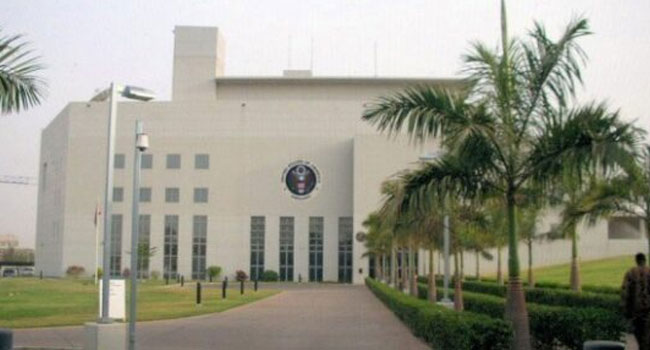
In a notice released by the United States Embassy in Nigeria in Abuja, U.S. citizens were advised to exercise heightened caution when visiting American diplomatic premises and institutions connected to the United States.
The alert specifically referenced the U.S. Embassy Abuja and the U.S. Consulate General Lagos, urging American nationals to remain vigilant and adopt additional security measures while travelling to these locations.
According to the embassy, citizens should vary their travel routes and times, avoid predictable routines, and stay alert to their surroundings in order to reduce potential risks.
“U.S. citizens should take additional precautions when travelling to the U.S. Embassy, the U.S. Consulate General in Lagos, and U.S.-affiliated schools,” the notice stated.
The advisory also encouraged individuals to keep a low profile in public places, avoid large crowds and demonstrations, and review personal security plans with family members.
Other safety measures recommended by the embassy include ensuring mobile phones are fully charged in case of emergencies and familiarising oneself with emergency exits when entering public buildings.
Despite the alert, the consular sections of both the embassy in Abuja and the consulate in Lagos will remain open for routine services.
The embassy advised American citizens in Nigeria to continue monitoring updates through its official channels and follow security advisories issued by the U.S. Department of State.
The security warning comes amid heightened global tensions following the ongoing conflict between Israel and Iran, which has drawn in the United States and further destabilised the Middle East.
The war, which began on February 28, 2026, has seen joint U.S.–Israeli strikes targeting Iranian leadership, military infrastructure, and nuclear facilities. The conflict intensified after the reported killing of Iran’s Supreme Leader, Ali Khamenei, during early strikes.
Following his death, his son, Mojtaba Khamenei, was named as his successor on March 8, 2026, assuming leadership amid the ongoing hostilities.

Iran has since responded with waves of ballistic missile and drone attacks, targeting Israeli cities such as Tel Aviv and Haifa, as well as U.S. military assets across the Gulf region.
The conflict has already caused significant casualties and disrupted global energy markets, with Brent crude oil prices briefly rising to nearly $120 per barrel amid fears of supply disruptions through the strategically important Strait of Hormuz.
Analysts warn that the ongoing war could further affect regional stability, global air travel, and energy infrastructure across the Middle East.
ADVERTISEMENTS