By Godwin Obi
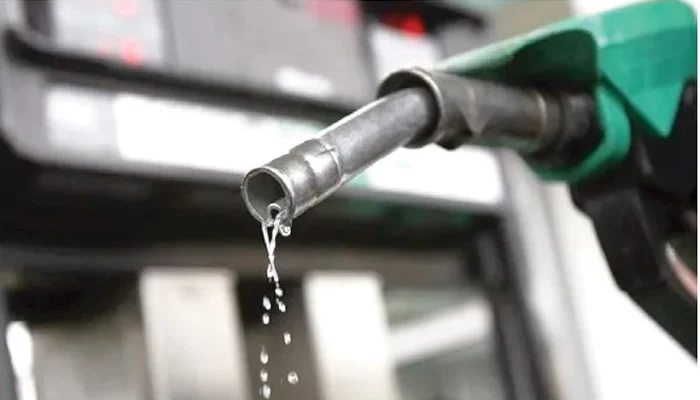
Businesses across Nigeria are bracing for a fresh wave of inflation after the price of Premium Motor Spirit (petrol) surged to about N1,300 per litre in several parts of the country on Monday.
Economists and members of the Organised Private Sector warned that the development could trigger higher costs for transportation, food, and other goods and services as companies struggle to adjust their budgets and pricing strategies.
The price increase followed a fresh adjustment by the Dangote Petroleum Refinery, which raised its gantry price of petrol from N995 to N1,175 per litre, representing an increase of about 18.1 per cent within three days.
As a result, filling stations nationwide quickly adjusted their pump prices, with petrol selling between N1,250 and N1,400 per litre in different locations.
Industry checks showed that some marketers sold petrol at N1,250, N1,350 and N1,400 per litre, sparking fears of renewed inflationary pressure on the economy.
The latest hike is linked to the ongoing geopolitical tensions involving the United States, Israel and Iran, which have driven global crude oil prices sharply upward.
Global crude prices briefly surged to nearly $115 per barrel before dropping to around $98 later on Monday, reflecting volatility in the international oil market.
Frontline Reporters gathered that the refinery communicated the new gantry prices to marketers and depot operators earlier on Monday.
A senior official of the refinery, who spoke on condition of anonymity, confirmed the adjustment, noting that the market environment had become extremely volatile.
“PMS is now N1,175 per litre while Automotive Gas Oil (diesel) is N1,620 per litre,” the official said.
“The market has been extremely volatile and replacement costs have shifted significantly in recent days. These adjustments reflect prevailing market fundamentals and the cost environment we are currently operating in.”
Industry pricing platform petroleumprice.ng also confirmed that the revised rates had already been reflected across depot pricing systems used by downstream marketers.
Filling Stations Adjust Prices
Several filling stations responded quickly to the new price regime.
An MRS filling station in Olowotedo adjusted its petrol price to N1,250 per litre, while NIPCO sold the product at about N1,200 per litre.
In Abuja, stations along Airport Road also adjusted their prices.
Shafa and AA Rano sold petrol at N1,092 per litre, while Shema dispensed the product at N1,100 per litre earlier in the day. Optima recorded the highest price on the corridor at N1,270 per litre, while Matrix sold petrol at N1,092 per litre.
Dangote Refinery Explains Price Increase
In a statement posted on its X handle, the Dangote Group defended the price adjustment, attributing it to global market conditions.
Managing Director of the refinery, David Bird, said domestic refining still provides supply security for Nigeria despite global supply disruptions.
According to him, even under the crude-for-naira arrangement, Nigerian crude is purchased at international benchmark prices, meaning the refinery does not receive discounted crude.
Bird explained that global oil markets had experienced extreme volatility, with crude prices rising sharply within a short period.
He also revealed that freight costs had surged significantly, with tanker costs increasing from about $800,000 to roughly $3.5 million per shipment.
The refinery currently operates at a nameplate capacity of about 650,000 barrels per day, with potential expansion to 700,000 barrels per day.
Businesses Warn Of Rising Inflation
Members of the Organised Private Sector warned that the petrol price hike could trigger higher inflation, especially through increased transportation and logistics costs.
Director-General of the Lagos Chamber of Commerce and Industry, Chinyere Almona, said the development had already started affecting logistics costs across the economy.
“We are already seeing increases in fuel pump prices, and this is likely to impact transport and food prices as it relates to food distribution logistics,” she said.
Almona warned that disruptions in global freight logistics caused by the Middle East crisis could also increase the cost of imported goods.
She urged the Federal Government to strengthen investments in local manufacturing and refining capacity to reduce Nigeria’s vulnerability to global shocks.
Employers Raise Concerns
Director-General of the Nigeria Employers’ Consultative Association, Adewale Oyerinde, also warned that rising energy prices could worsen inflationary pressures in Nigeria.
He explained that higher fuel prices increase the cost of production, logistics and distribution across key sectors such as agriculture and manufacturing.
“As businesses contend with escalating operational expenses, these costs are often transferred to consumers through higher prices of goods and services,” Oyerinde said.
Small Businesses Feel The Pressure
President of the Association of Small Business Owners of Nigeria, Femi Egbesola, said the petrol price increase would significantly raise transportation and production costs.
“Whenever there is a hike in fuel price, it naturally pushes inflation upward because energy is used across virtually every sector of the economy,” he said.
Egbesola warned that the rising cost of energy could reduce consumer purchasing power and place additional pressure on small businesses.
Labour Faults Downstream Sector
Reacting to the development, the Nigeria Labour Congress criticised the persistent rise in petrol prices, arguing that it exposes weaknesses in Nigeria’s downstream petroleum sector.
Assistant General Secretary of the labour union, Christopher Onyeka, said the situation raises questions about the country’s domestic refining capacity.
“If we were truly refining domestically, global events should not have such a strong impact on local petrol prices,” he said.
Global Oil Market Tensions
Meanwhile, the Group of Seven nations said they were prepared to take necessary measures to support global energy supply amid the ongoing conflict involving the United States, Israel and Iran.
According to the International Energy Agency, member countries currently hold more than 1.2 billion barrels of emergency oil reserves, with an additional 600 million barrels held by industry operators under government obligations.
Global oil markets have been particularly affected by disruptions around the Strait of Hormuz, through which nearly 20 per cent of the world’s oil supply normally passes.
Industry analysts warn that if the geopolitical crisis persists, petrol prices in Nigeria could rise further in the coming weeks, potentially pushing pump prices toward N2,000 per litre..
ADVERTISEMENTS