


By Frontline Reporters
Akutah Ignites Fresh Hope for Nigerian Shippers as SALS Celebrates Maritime Sector Revival
By Frontline Reporters
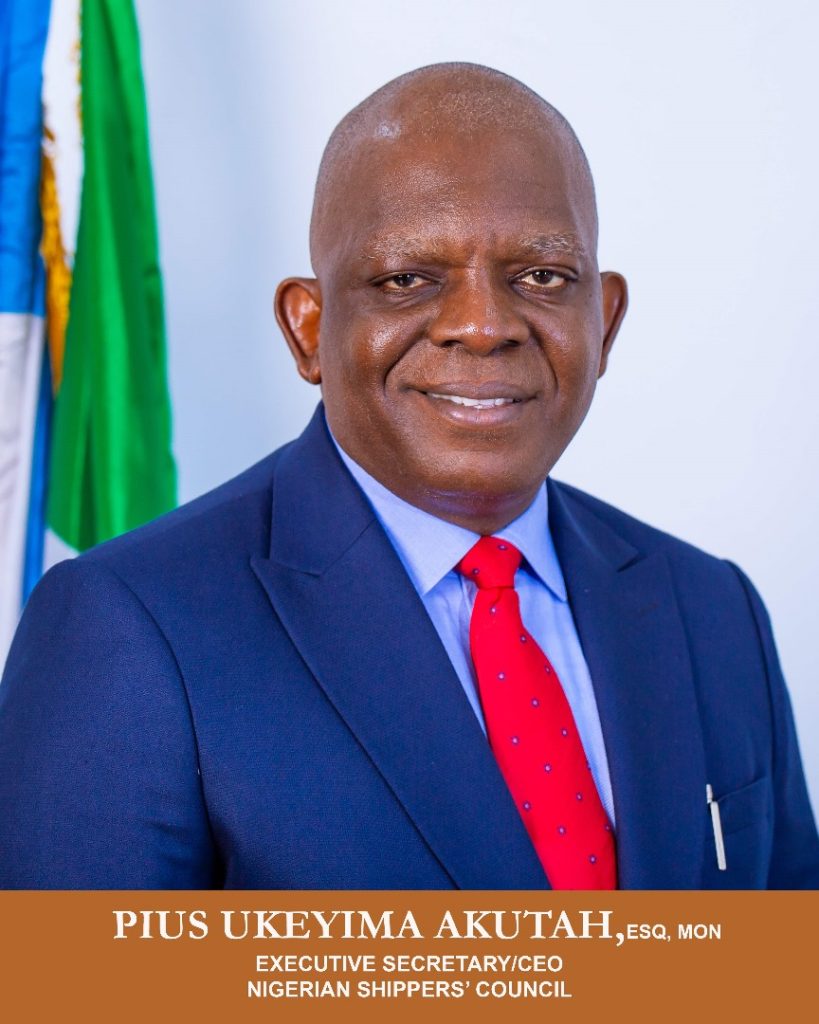
A renewed sense of confidence is sweeping across Nigeria’s maritime industry as the Shippers Association of Lagos State (SALS) has showered praise on the Executive Secretary and Chief Executive Officer of the Nigerian Shippers’ Council, Pius Ukeyima Akutah, for what stakeholders describe as a remarkable transformation in the nation’s shipping sector.
The commendation came during an inspection tour of a proposed facility aimed at strengthening and empowering Nigerian shippers — a project many industry players say symbolizes a new era of purposeful leadership and renewed commitment to maritime development.
The visit drew key stakeholders from across the industry, including officials of SALS, representatives of the Nigerian Shippers’ Council, freight forwarders, shipping operators, importers, exporters, and other maritime stakeholders, all of whom expressed optimism about the future of the sector under Akutah’s leadership.
Leading the applause was SALS President, Nicodemus Odolo, who lauded Akutah for matching words with action and restoring trust among Nigerian shippers through visible results and proactive engagement.
Odolo noted that despite the association’s decades-long existence, members had never witnessed the level of support, responsiveness, and collaboration currently being demonstrated by the Nigerian Shippers’ Council.
Reflecting on earlier engagements with the Council, he revealed that promises made by Akutah just months ago have already begun to materialize — a development he described as rare in public administration and a clear sign of credible leadership.
“Today, what was promised has become reality. That is the hallmark of leadership built on trust and credibility,” Odolo declared to resounding applause from stakeholders present at the event.
The SALS president emphasized that confidence in government institutions can only be sustained when leadership demonstrates sincerity, consistency, and commitment to the welfare of stakeholders. According to him, the ongoing engagement between the Council and industry operators has created a fresh atmosphere of trust that many believe is capable of repositioning the maritime industry for greater productivity and international relevance
.

Reverend Nichodemus Odolo, President , Shippers Association, Lagos State
He stressed that Nigeria possesses enormous potential to become a dominant global maritime force, citing the country’s strategic coastal advantage, growing economy, massive cargo traffic, and large consumer market.
According to him, with visionary leadership, strategic reforms, and stronger collaboration between regulators and operators, Nigeria is well positioned to emerge as Africa’s maritime hub and a major player in international shipping.
Odolo further noted that the maritime industry remains one of the most critical sectors of the Nigerian economy, with enormous capacity to drive trade, industrialization, job creation, and revenue generation if properly harnessed.
He said stakeholders have long advocated for reforms capable of reducing bottlenecks at the ports, improving cargo clearance processes, enhancing operational efficiency, and creating a more business-friendly environment for local shippers.
According to him, recent actions and engagements by the Nigerian Shippers’ Council under Akutah’s leadership have given operators renewed confidence that many of these long-standing challenges may finally receive the attention they deserve.
Industry stakeholders at the event also commended the proposed facility being inspected, describing it as a potentially transformative project that could provide institutional support, operational coordination, and improved access to resources for Nigerian shippers.
Some participants noted that beyond infrastructure development, the initiative represents a broader commitment toward strengthening indigenous participation in maritime trade and improving the competitiveness of Nigerian businesses within the global shipping market.
They argued that empowering local shippers remains essential to reducing capital flight, encouraging local investment, and boosting Nigeria’s position in regional and international trade.
Observers at the event further described Akutah’s leadership style as inclusive and stakeholder-driven, noting that his administration appears committed to maintaining open communication with operators and ensuring that industry concerns are addressed through dialogue and practical solutions.
Several maritime operators present during the inspection tour expressed optimism that sustained cooperation between regulators and private sector stakeholders could significantly improve efficiency across Nigeria’s ports and shipping corridors.
They also stressed the need for continuous reforms, modernization of port infrastructure, improved digital processes, and policies that encourage ease of doing business within the maritime sector.
According to stakeholders, Nigeria’s strategic location within the Gulf of Guinea gives it a natural advantage to become a leading shipping and logistics hub for West and Central Africa if the right policies and investments are sustained.
In a strong vote of confidence, the SALS president pledged the association’s unwavering support for the Nigerian Shippers’ Council, assuring stakeholders that the group would continue working closely with the agency to advance the interests of Nigerian shippers and deepen reforms within the industry.
Odolo stated that SALS remains committed to fostering unity among shipping stakeholders while supporting initiatives capable of improving transparency, operational efficiency, and competitiveness within the maritime value chain.
He added that stronger synergy between government institutions and private sector operators would be critical to unlocking the full economic potential of the industry.
For many observers at the event, the inspection tour was more than a routine visit — it was a powerful signal that Nigeria’s maritime sector may finally be entering a long-awaited phase of growth, accountability, and renewed global relevance.

Barr. Osuala Nwagbara
According to him, with visionary leadership, strategic reforms, and stronger collaboration between regulators and operators, Nigeria is well positioned to emerge as Africa’s maritime hub and a major player in international shipping.
In a strong vote of confidence, the SALS president pledged the association’s unwavering support for the Nigerian Shippers’ Council, assuring stakeholders that the group would continue working closely with the agency to advance the interests of Nigerian shippers and deepen reforms within the industry.
For many observers at the event, the inspection tour was more than a routine visit — it was a powerful signal that Nigeria’s maritime sector may finally be entering a long-awaited phase of growth, accountability, and renewed global relevance.
Many stakeholders believe that if the current momentum is sustained, the industry could witness improved investor confidence, enhanced trade facilitation, increased indigenous participation, and stronger economic contributions to national development.
As the maritime community continues to monitor ongoing reforms and initiatives, expectations remain high that the Nigerian Shippers’ Council will continue to champion policies and projects capable of transforming the sector into a globally competitive industry.
For now, however, one sentiment appeared unanimous among participants at the gathering: the tide may finally be turning for Nigerian shippers, and a new era of opportunity, collaboration, and sectoral revival could be on the horizon.
ADVERTISEMENTS













2026-05-25