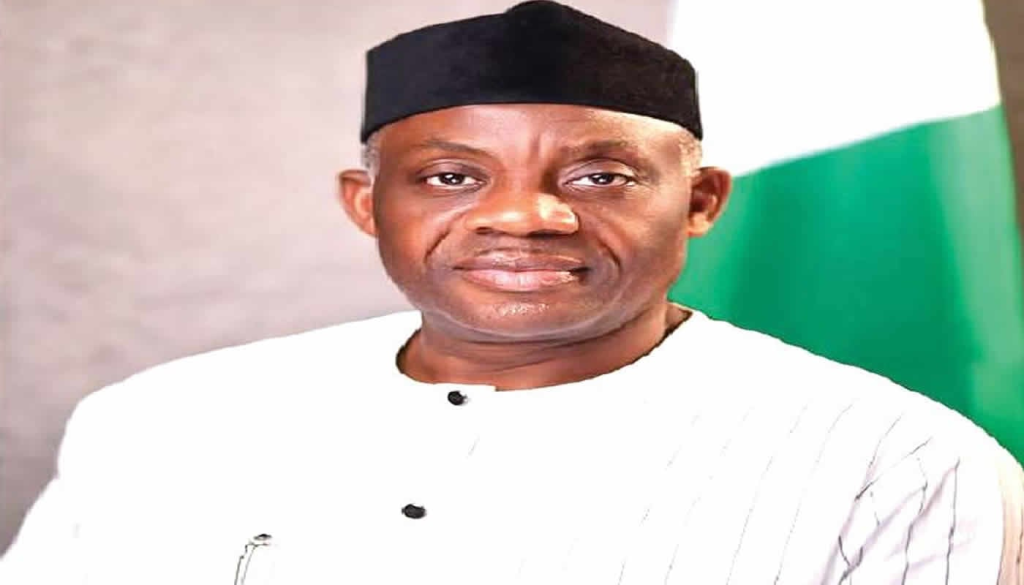
The Minister of Education, Tunji Alausa,
By Frontline Reporters
The Federal Government has disclosed that Nigeria requires about $345 million annually to effectively reintegrate and provide essential skills for the estimated 15 million out-of-school children across the country.
The Minister of Education, Tunji Alausa, revealed this on Tuesday during the inaugural Federal Ministry of Education Private Sector Breakfast Convening held in Lagos.
According to the minister, the estimated investment is based on current per capita spending required to bring millions of children outside the formal education system back into school while equipping them with relevant skills.
Alausa disclosed that 25 per cent of Nigerian children aged between 5 and 14 years are currently out of school, with the situation more severe in the North-East and North-West, where the rate rises to 41 per cent.
Renewed focus on education reforms
The minister noted that although the Federal Government has made progress through the Nigeria Education Sector Renewal Initiative (NESRI), significant investment is still required to address the country’s education deficit.
“The challenges in the Nigerian education sector present a marked opportunity to increase access, improve quality, and strengthen systems,” he said.
He added that education remains a key component of the Renewed Hope Agenda, which aims to transform Nigeria into a $1 trillion economy by 2030.
Investment in skills development
To strengthen technical and vocational training, the government has disbursed ₦10.6 billion to Technical and Vocational Education and Training (TVET) centres nationwide, while ₦3.4 billion has been paid directly to trainees.
According to the minister, the programme attracted 1.3 million applications, with 160,000 students matched to training centres and 72,000 currently enrolled using biometric verification.
Infrastructure upgrades in tertiary institutions
Alausa further disclosed that the Federal Government has invested more than ₦156 billion in rehabilitating 18 medical schools and several engineering faculties across the country.
He said ₦70 billion was spent on laboratory and technology workshop upgrades, while ₦100 billion went into the construction of new hostels across 50 tertiary institutions.
Grants to support student innovation
The minister also announced the creation of a Student Venture Capital Grant aimed at encouraging innovation among students in Science, Technology, Engineering, Mathematics and Medicine (STEMM) fields.
Under the initiative, the government has earmarked ₦50 million in equity-free grants, with 65 students shortlisted for the programme.
Global education funding partnership
Alausa also revealed that Nigeria is partnering with the Italy to host an international education conference aimed at raising $15 billion to support foundational learning across 90 countries.
He said the conference is expected to mobilise $5 billion in direct funding alongside additional catalytic funding estimated at ₦10 billion.
Call for private sector support
The minister urged private sector organisations to align their investments with national education priorities through the proposed Education Sector Wide Approach, which aims to ensure transparency, accountability, and stronger governance.
Also speaking at the event, the Minister of State for Education, Suwaiba Ahmad, described the gathering as a strategic platform to deepen collaboration with private sector partners.
“Government alone cannot achieve the scale of transformation required. The private sector remains a critical partner in driving innovation, expanding infrastructure, and supporting skills development,” she said.
Gains under education reform programme
Officials said reforms under the Nigeria Education Sector Renewal Initiative have already delivered notable results, including:
- The reintegration of 1 million children into formal education
- Training of 1,400 Tsangaya teachers for Almajiri education
- Mapping of 32 million students and 221,000 schools across 21 states to improve data and digital systems
- Disbursement of ₦128 billion in institutional fees through the Nigeria Education Loan Fund, benefiting over 1.1 million students
To further bridge the funding gap, the government is promoting the Global Partnership for Education Multiplier, a financing mechanism designed to match private sector contributions one-to-one with partner funding.
Experts at the event noted that every additional year of schooling in Nigeria increases individual earnings by 5.7 per cent and boosts productivity by 6 per cent, highlighting the economic benefits of sustained investment in education.
ADVERTISEMENTS