BY FRONTLINE REPORTERS
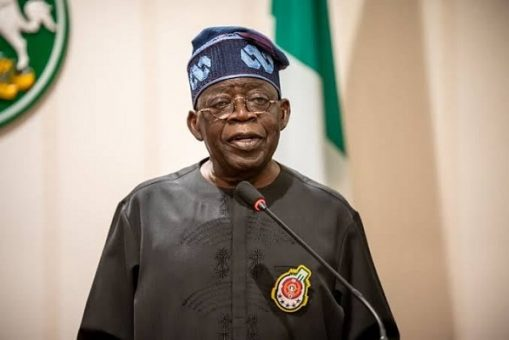
President Bola Ahmed Tinubu has disclosed that Nigeria will spend about $11.6 billion on debt servicing in 2026, representing nearly half of the country’s projected revenue for the year.
Tinubu made the disclosure on Tuesday while speaking at the Africa Forward Summit held at the Kenyatta International Convention Centre in Nairobi. The summit was co-hosted by William Ruto and Emmanuel Macron and attended by leaders and officials from over 30 African countries.
According to a statement issued by the President’s Special Adviser on Information and Strategy, Bayo Onanuga, Tinubu said Africa continues to suffer under a global financial architecture that places the continent at a disadvantage and frustrates industrial development.
He lamented that huge debt servicing obligations were depriving developing economies of critical investments in industrial growth, manufacturing and infrastructure.
“Every single dollar that leaves our treasury to pay punitive interest rates is a dollar that did not go into our steel sector, textile mills, agro-processing plants or digital industries,” the President said.
Tinubu argued that Africa’s dependence on exporting raw materials while importing finished products at high costs was a direct consequence of an international financial system structured against the continent’s economic advancement.
According to him, Africa’s contribution to global manufacturing remains below two per cent despite decades of political independence.
The President said Nigeria had implemented difficult but necessary economic reforms through sovereign decisions rather than external pressure. He listed the removal of fuel subsidy, unification of exchange rates, recapitalisation of the banking sector and Nigeria’s exit from the Financial Action Task Force grey list among measures already undertaken by his administration.
Tinubu noted that the reforms had helped improve investor confidence, strengthen external reserves to $45.5 billion and reduce the country’s debt-to-GDP ratio, projected at 32.3 per cent in 2026.
Despite the progress, he maintained that African economies remained constrained by expensive borrowing costs and limited access to affordable financing.
“How can an African manufacturer compete with competitors in Europe, Asia or North America when the cost of borrowing in our countries is five to ten times higher?” he queried.
The President insisted that Nigeria was not seeking charity but a fair global financial system capable of supporting Africa’s industrialisation agenda, including refining crude oil, processing minerals and manufacturing pharmaceuticals locally.
Tinubu also advocated stronger regional cooperation on maritime security and blue economy development, pledging that Nigeria would make its Deep Blue Project maritime intelligence infrastructure available as a shared platform for willing Gulf of Guinea countries.
He stressed the need for harmonised laws, interoperable systems and coordinated maritime enforcement across the region, adding that secure sea lanes and stable regulations were necessary to attract investment.
On migration, the President called for expanded legal migration pathways while urging international partners to address the economic hardship and insecurity driving irregular migration across Africa.
He said Nigeria had incorporated migration management into its economic transformation strategy through investments in infrastructure, agriculture and financial reforms aimed at creating jobs and improving livelihoods.
“People who have jobs, security and hope at home do not typically risk their lives in the back of a smuggler’s truck,” Tinubu stated.
The President also urged African countries to work collectively toward building a stronger and more effective global migration governance system, while reaffirming Nigeria’s support for the African Union Migration Policy Framework and the Khartoum Process.
On the sidelines of the summit, Tinubu held bilateral meetings with the President of Madagascar, Michael Randrianirina, and the President of the Confederation of African Football, Patrice Motsepe, during which Nigeria expressed readiness to host the 2026 CAF Awards.
Prominent members of the Nigerian delegation included Aliko Dangote, Tony Elumelu, Abdulsamad Rabiu and Aigboje Aig-Imoukhuede, alongside several ministers and senior government officials.
ADVERTISEMENTS