


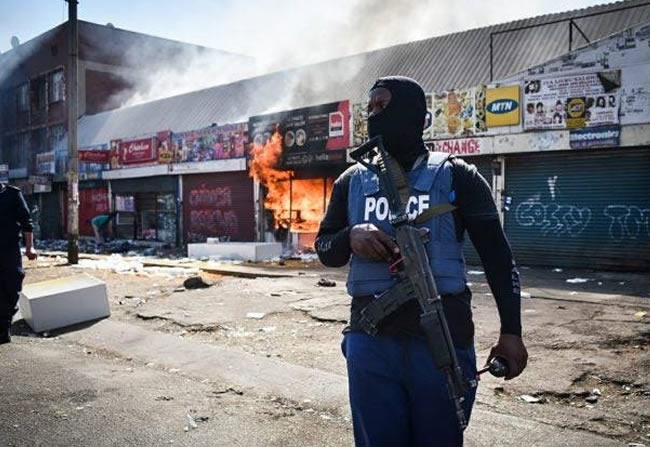
Amid growing unrest and renewed attacks on foreign nationals in South Africa, the Nigerian Consulate, in collaboration with the Nigerian Citizens Association in South Africa (NICASA), has announced a free repatriation flight for Nigerians willing to return home permanently.
President of NICASA, Frank Onyekwelu, disclosed this in an interview with Frontline Reporters, saying the worsening situation had forced many Nigerians to shut down their businesses and seek safer options.
According to him, although there is no formal compensation or support system yet for affected Nigerians, the repatriation initiative has already attracted significant interest.
“The Nigerian Consulate, in conjunction with NICASA, has offered a free repatriation flight to any Nigerian who wishes to leave South Africa permanently, and the process is ongoing. We have already recorded many Nigerians indicating interest in returning home,” Onyekwelu said.
Fear, Panic Grip Nigerian Community
Many Nigerians living in South Africa have described terrifying experiences, lamenting that the recurring violence now threatens their safety, livelihoods, and mental wellbeing.
Several residents told Frontline Reporters they had been forced to remain indoors, living in fear as anti-foreigner attacks intensify across major cities including Pretoria, Johannesburg, Durban, East London, and parts of KwaZulu-Natal.
The unrest has reportedly led to harassment, looting, destruction of businesses, and injuries, sparking panic among migrant communities.
In response, the Nigerians in Diaspora Commission (NiDCOM) advised Nigerian business owners to temporarily close their shops to avoid casualties and further losses.
Groups Behind the Protests
Reports indicate that the protests are being driven by community groups, anti-immigration organisations, and movements such as Operation Dudula and March and March, all campaigning against undocumented migrants.
These groups accuse foreigners of contributing to unemployment, crime, and economic hardship, and are demanding the deportation of undocumented nationals, especially migrants from countries such as Nigeria, Ghana, Zimbabwe, Mozambique, and Somalia.
Two Nigerians Confirmed Dead
The Nigerian Consulate General in Johannesburg confirmed the deaths of two Nigerians in separate incidents linked to the tension.
Consul-General Ninikanwa Okey-Uche said Amaramiro Emmanuel died from injuries allegedly sustained after being assaulted by personnel of the South African National Defence Force on April 20.
She added that another Nigerian, Ekpenyong Andrew, was arrested on April 19 in Pretoria following an alleged altercation with members of the Tshwane Metro Police. His body was later found at the Pretoria Central Mortuary.
Viral Videos Show Threats to Foreigners
Hundreds of protesters have also been seen in viral videos marching through streets carrying sticks and chanting anti-foreigner songs.
In one clip, a Nigerian trader was confronted and ordered to leave the country with his family.
“I have lived here for a long time. I am only trying to feed my children,” the trader pleaded.
But protesters responded that foreigners were no longer welcome.
“Take your wife and children and go back to your country,” one voice was heard saying.
Nigerian Traders Count Heavy Losses
Nigerian business owners say they are suffering huge financial losses as foreign-owned shops continue to be targeted.
A restaurant operator in Braamfontein, Johannesburg, Yemisi Adewale, said she narrowly escaped an attack at a local market.
“They are specifically targeting businesses owned by Nigerians and Ghanaians. Their aim is to loot and destroy goods,” she said.
“The police are present, but that has not stopped the attacks. We had to run for safety and abandon our goods.”
She added that many business owners have now shut down operations completely.
“If this continues, many of us may lose everything. This is our only source of livelihood.”
Another trader, who requested anonymity, described the unrest as “daylight robbery disguised as protest.”
“They said it was a protest, but this is organised looting. People are carrying sticks and clubs, attacking anyone they identify as a foreigner,” she said.
Informal Settlements Worst Hit
Diaspora leaders say Nigerians living in informal settlements and relying on petty trading are the most affected.
President of Ohanaeze Ndigbo in South Africa, ABC Okokoh, said the unrest is concentrated in certain settlements rather than across the entire country.
“Some areas are calm, and many people still go to work. But those in affected areas are staying indoors,” he said.
He added that some local actors may be exploiting the situation for political gain, while the government remains cautious to avoid escalating tensions.
Nigerian Government Monitoring Situation
The Nigerians in Diaspora Commission said it was awaiting official updates, adding that the matter had been escalated to the Minister of Foreign Affairs.
Head of Media, Public Relations and Protocols Unit of NiDCOM, Abdur-Rahman Balogun, said Foreign Affairs Minister Bianca Odumegwu-Ojukwu was already engaging South African authorities, while Nigerians anxiously await the outcome of the discussions.
ADVERTISEMENTS











2026-04-29